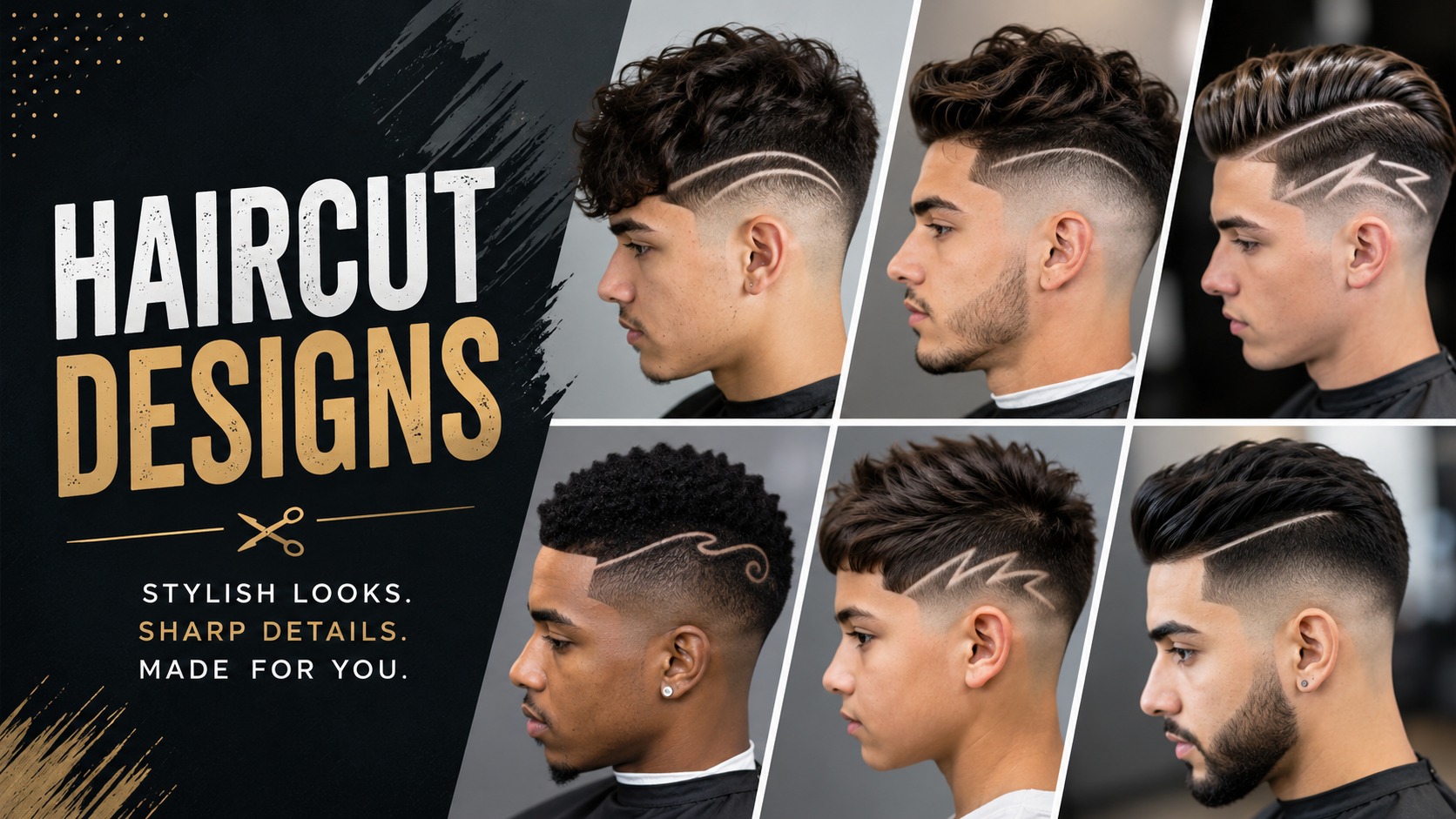
Haircut designs turn an ordinary fade into a personal statement. A barber shaves a pattern into short hair using clippers, trimmers, or a straight razor, and the result instantly upgrades a basic cut into wearable art.
This guide breaks down the most popular designs, shows you which ones suit your hair type and face shape, and tells you exactly how to keep the lines sharp between barber visits.
What Are Haircut Designs?
A haircut design is any pattern shaved or razored into short hair. Barbers create the look by cutting away small sections of hair to expose the scalp, which creates contrast against the surrounding hair.
Designs range from a single clean line to detailed artwork like animals, logos, or lettering. The shorter and darker your hair, the more the pattern stands out.
A Short History of Haircut Designs
Hip-hop culture and sports culture popularized shaved hair patterns decades ago. Athletes and performers used the look to express individuality on camera, and the trend spread from there.
Today the style sits firmly in both fashion and street culture. Barbers now treat it as a craft, with some specializing entirely in freehand design work.
Why Haircut Designs Are Trending in 2026
Social media keeps the trend alive. Influencers and athletes post fresh cuts constantly, and viewers want to recreate what they see.
The style also rewards confidence. A design takes a basic haircut and makes it instantly recognizable, which appeals to people who want to stand out without growing their hair long.
Tools and Techniques Barbers Use
Clippers outline the main shape of a design, while smaller trimmers handle fine details like curves or sharp points. Barbers reach for a straight razor when they need the cleanest, smoothest lines.
Some barbers sketch the pattern onto the scalp first or use a stencil for complex shapes. Others freestyle the entire design without any guide, which takes serious skill and a steady hand.
Color sprays can add an extra layer of impact to a finished design. They highlight the shaved lines and make the pattern pop, especially in photos.
Popular Haircut Design Styles
The following styles show up most often in barbershops right now. Most work on any fade, but each one creates a slightly different effect.
1. Thick Shaved Line
A single bold line cut into the side of a fade creates instant contrast without much complexity. It pairs well with a clean beard line for a unified look.
2. Lightning Bolt
The lightning bolt is one of the most requested designs because of its sharp, energetic shape. It needs regular touch-ups to keep the zig-zag edges crisp.
3. Freestyle Razor Design
A freestyle design has no fixed shape. The barber improvises curves, swirls, and angles, so no two freestyle cuts ever look the same.
4. Zig-Zag Pattern
Zig-zag lines add movement to even the shortest buzz cut. Barbers can keep it small near the temple or run it across the entire side of the head.
5. Geometric Shapes
Triangles, diamonds, and squares give a haircut a modern, graphic feel. Straight hair shows off the crisp edges best, though a flat iron can prep curlier hair for the same effect.
6. Multiple Lines in a Fade
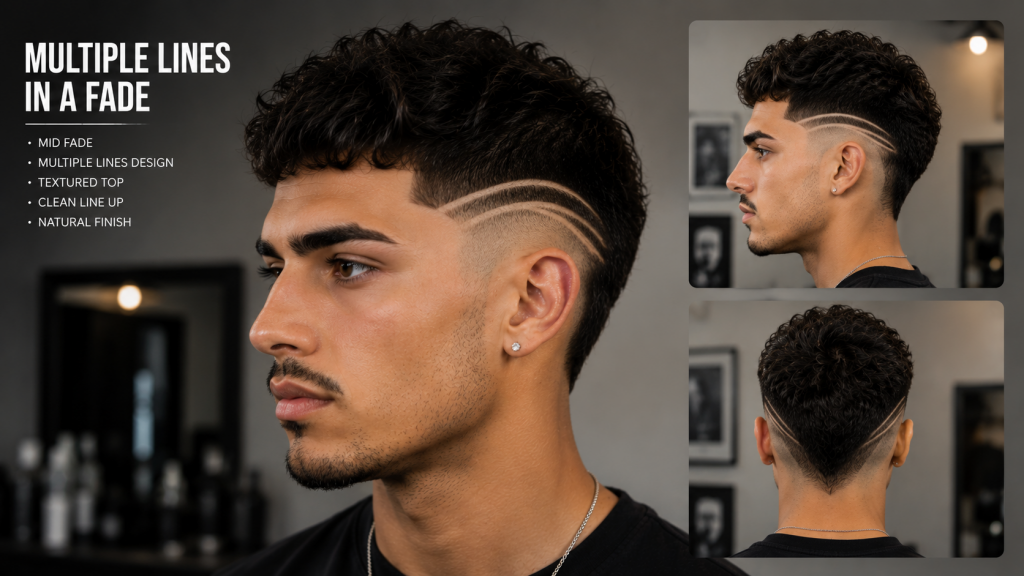
Two or three parallel lines shaved into a fade create a split-shave effect. The repeated lines bring texture to the sides without overwhelming the cut.
7. Hard Part with Line-Up
A hard part is a single shaved line that defines a side part. Combined with a sharp line-up around the hairline, it gives an otherwise simple cut a polished, structured edge.
8. V-Cut Hair Art
A V-shape gets shaved into the back or side of the head, often with smaller details added inside it. The shape itself reads as bold even before any extra artwork goes in.
9. Arrow and X Designs
Arrows and X shapes break up a plain fade with sharp points instead of curves. The contrast between the shaved lines and surrounding hair makes these graphic shapes pop.
10. Cross and Tribal Patterns
A shaved cross design carries personal or religious meaning for a lot of guys, and extending it into an eyebrow slit makes the shape look continuous. Tribal patterns work the same way, using bold, sharp lines for a striking effect.
11. Moon and Star Designs
A crescent moon or scattered stars bring a softer, more personal touch to a fade. Curved shapes like these tend to read as more artistic than purely geometric lines.
12. Wings or Feather Patterns
A wing design at the nape of the neck creates the illusion of movement and depth. Skilled barbers carve feather-like texture into the lines for a near three-dimensional effect.
13. Mirror Line Design
Mirror lines repeat a shaved pattern on both sides of a part, creating a symmetrical, high-fashion look. This style works especially well on medium-length, messy hairstyles.
14. Brand Logos and Sports Emblems
Sports logos and brand symbols give a fade a fun, recognizable identity. Simple shapes like a swoosh or a number translate cleanly into hair because they rely on clean lines rather than fine detail.
15. Floral and Rose Designs
Floral patterns soften an otherwise sharp design with petals and leaves. They take more time in the chair than a basic line, but they stand out as genuinely unique.
16. Shooting Star Design
A shooting star combines a star shape with trailing motion lines for a sense of energy. It works well as a standalone accent rather than covering a large section of the head.
Haircut Designs by Cut Type
A design changes character depending on the base haircut underneath it. Here’s how the most common cuts handle added artwork.
17. Buzz Cut with Artistic Lines
A buzz cut gives a barber a clean, even canvas, so even a single line shows up clearly. This combination keeps maintenance simple since the rest of the head stays uniform.
18. Mohawk Fade with Hair Art
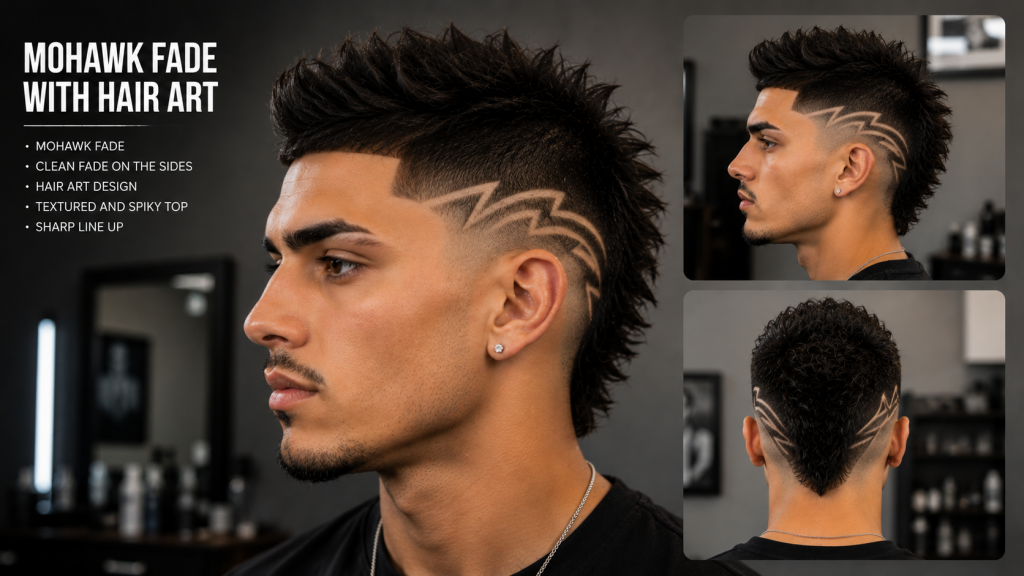
Adding a design to a mohawk fade emphasizes the contrast between the long center strip and the shaved sides. The mohawk stays the focal point while the lines highlight the fade’s edges.
19. Undercut with Razor Patterns
An undercut already creates contrast between the long top and short sides, and a razor pattern adds another layer on top of that. Even a simple curve changes the entire feel of the cut.
20. Taper Fade with Shaved Lines
A taper fade keeps a bit of length throughout the sides, which gives a design a softer backdrop than a skin fade. This combination suits guys who want personality without going too extreme.
21. Drop Fade with Custom Artwork
A drop fade curves down behind the ear, and that curve gives a barber more room to fit a custom design. Straight or angled lines both work well here.
22. Crew Cut with Hardlines
Hardlines added to a crew cut add edge without changing the cut’s structured, professional shape. This option suits guys who want a hint of personality in an otherwise conservative style.
23. Afro Designs
Patterns shaved into the sides or back of an afro create bold contrast against the volume on top. The natural texture of the afro makes any shaved line stand out sharply.
Haircut Designs With Beards
A faded beard and a design haircut create a coordinated, polished look when they share the same fade height. A goatee or Van Dyke pairs better with classic, minimal designs since the focus stays on the chin.
An anchor beard, with its pointed jawline shape, complements geometric or angular hair designs especially well. Matching the sharpness of the beard line to the sharpness of the hair design ties the whole look together.
Best Haircut Designs by Face Shape
Round faces benefit from designs placed higher on the head, since height draws the eye upward and adds definition. A geometric shape near the crown works well here.
Square faces already have strong, defined features, so softer curved designs like a moon or wing balance out the angles. Sharp geometric patterns can make a square jaw look even more boxy.
Long faces look more balanced with designs that add width rather than height. A horizontal line or a design placed on the sides works better than one running vertically.
Oval faces handle almost any design well. This face shape gives you the most freedom to pick a style based purely on personal taste.
Best Haircut Designs by Hair Type
Straight hair shows off crisp geometric shapes and clean lines because the hair lies flat against the scalp. Triangles, diamonds, and sharp angles all read clearly on this hair type.
Curly hair needs a bit more prep before a detailed design goes in. A flat iron or straightening product helps the barber see the scalp clearly enough to cut precise lines.
Thick, coarse, dark hair creates the strongest contrast against shaved sections. Designs on this hair type tend to look the boldest and last the longest before they start to blur.
Fine or thinning hair works best with simple, minimal designs rather than dense patterns. A single clean line stands out more than a busy pattern on thinner hair.
How to Choose the Right Haircut Design for You
Start with your lifestyle before picking a pattern. A bold, large design suits someone with full creative freedom at work or school, while a subtle line works better in a formal environment.
Bring reference photos to your appointment. A clear picture helps your barber understand exactly what you want and avoids miscommunication over shape or placement.
Talk to your barber about your hair type and face shape before committing. An experienced barber can tell you which designs will hold their shape well on your specific hair texture.
How Often to Touch Up a Haircut Design
Hair grows roughly half an inch per month, so designs blur out faster than people expect. The schedule below keeps lines sharp based on the base haircut.
| Haircut Type | Touch-Up Frequency |
|---|---|
| Skin fade or high fade with design | Every 2–3 weeks |
| Low or mid fade with design | Every 3–4 weeks |
| Buzz cut or crew cut with lines | Every 4–6 weeks |
| Longer or textured styles with art | Every 5–6 weeks |
Skin fades and high fades need the most frequent visits since the contrast disappears the moment hair starts covering the shaved skin. Looser styles like crew cuts hold their shape longer because the design relies less on bare-skin contrast.
At-Home Maintenance Tips
A few small habits stretch the life of a design between barber visits.
- Trim stray hairs around the design with a small personal trimmer.
- Wash with a gentle shampoo to keep the scalp and hair healthy.
- Comb the surrounding hair regularly to keep the overall shape neat.
- Avoid rubbing or scratching the shaved area, since friction blurs sharp lines faster.
Products That Keep Lines Sharp
A light, non-sticky styling cream holds the surrounding hair in place without smothering the design. Heavy products like thick pomade can make a fresh design look greasy instead of sharp.
Edge control products help flatten any stray hairs right along the shaved lines. A light oil or moisturizer on the scalp keeps the skin healthy in the shaved sections.
Are Haircut Designs Appropriate for Work or School?
It depends entirely on the dress code you’re working with. Many offices and schools allow subtle designs, like a single shaved line, but draw the line at large or unconventional patterns.
Check your workplace or school policy before booking a bold design. A quick conversation with HR or an administrator saves you from an awkward conversation after the cut is already done.
How Much Does a Haircut Design Cost?
A basic line or simple shape usually adds a small flat fee on top of a standard haircut price, since it only takes a few extra minutes. Detailed freestyle work, logos, or large patterns cost more because they take significantly longer in the chair.
Prices vary by region and by barber skill level, so it’s worth asking your shop directly. A barber known for design work specifically may charge a premium for that specialty.
Frequently Asked Questions
What is a haircut design called?
People also call it hair art, a hair pattern, or a shaved design. Barbers create it using clippers or razors to cut shapes directly into the hair.
Are haircut designs permanent?
No. The pattern lasts only until your hair grows back to its original length, which usually takes one to two weeks before it starts losing definition.
Which haircut works best for a design?
Short haircuts and fades give a barber the cleanest space to cut a pattern. Longer hair tends to cover the design entirely, so shorter sides almost always work better.
Can curly hair get a detailed design?
Yes, though it takes more prep work. A barber typically straightens the hair first so the design lines stay crisp and visible.
How long does it take to get a haircut design?
A simple line adds only a few minutes to a standard haircut. Detailed freestyle artwork can take 30 minutes or more, depending on complexity.
Final Thoughts
The best haircut design is one that matches your face shape, hair type, and daily life, not just whatever looks trendiest online. A subtle line works just as well as a detailed pattern as long as it fits how you actually live and work.
Bring photos, talk through the details with your barber, and pick a design you’ll still want to maintain in three weeks. That’s what separates a haircut you love from one you regret by the next trim.