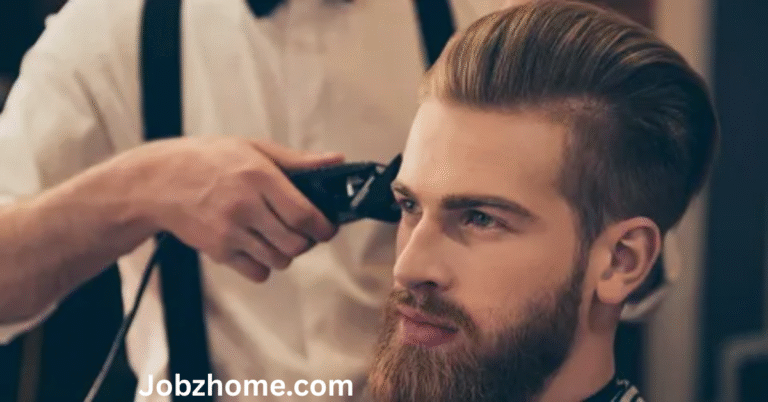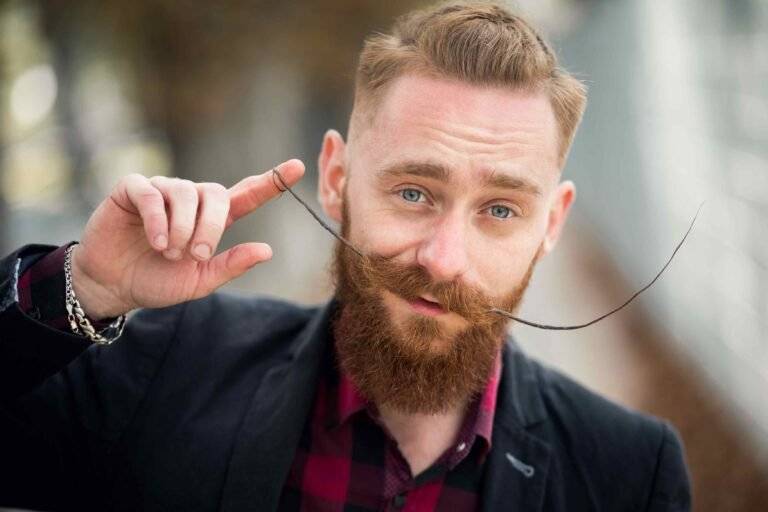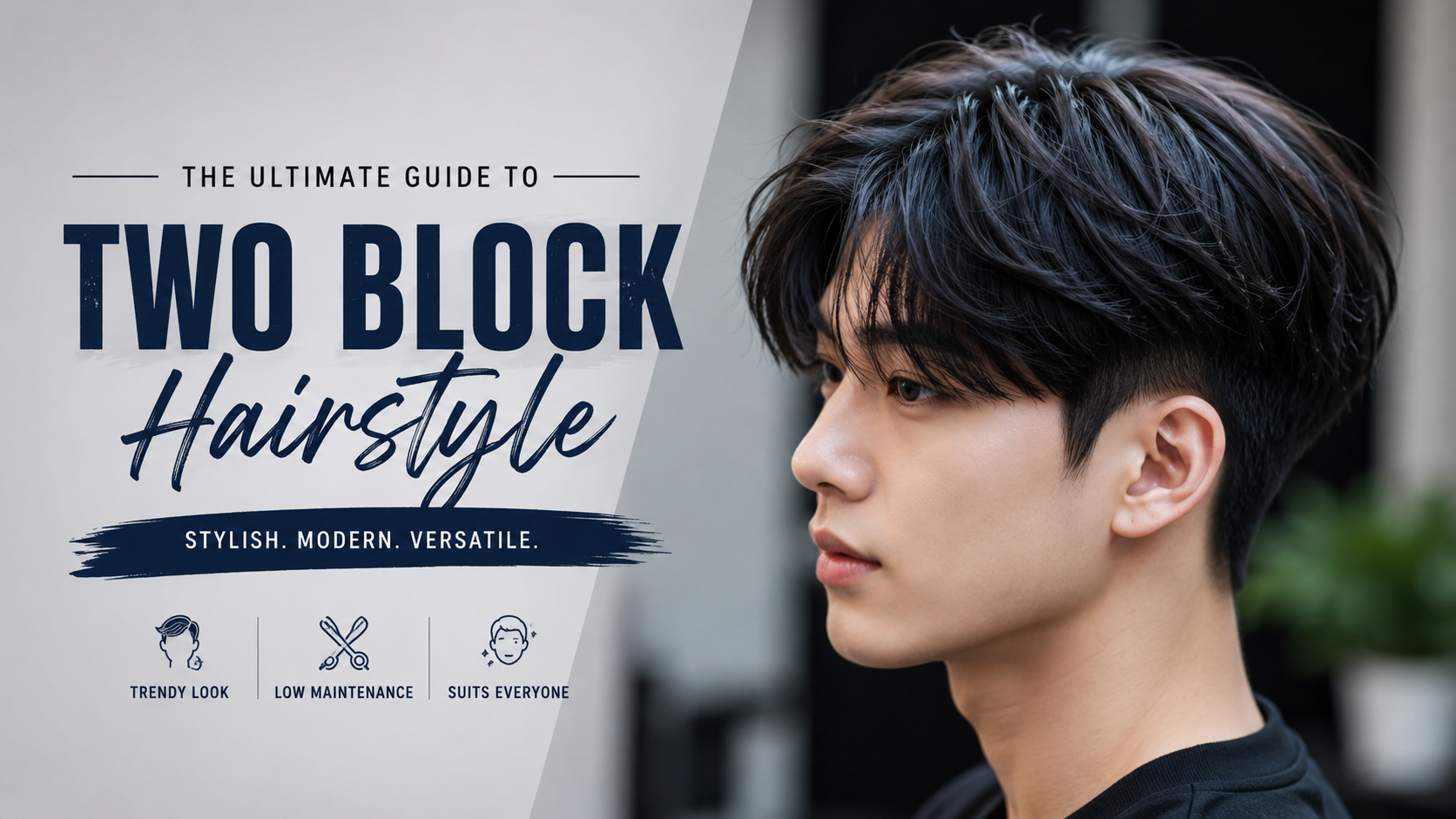
The two block haircut pairs a longer, textured top with short, cropped sides and back. A clear line separates the two sections instead of a gradual blend. That contrast gives the cut its name one “block” of length sits above another.
K-pop and Korean drama culture popularized the style. It started in South Korea in the early 2010s and now ranks among the most requested men’s cuts at barbershops worldwide.
What Makes a Two Block Different
The two block sits between an undercut and a fade. An undercut creates a hard, disconnected line. A fade blends the sides smoothly into the skin. The two block softens that harsh contrast without fully blending it away.
Korean stylists often use point cutting and slide cutting on the sides. This technique creates a natural transition rather than a sharp line. Western barbers, by contrast, tend to pair the cut with a cleaner taper or low fade.
Popular Two Block Variations
Comma hair curves the front fringe inward like a comma, framing the face softly. It’s currently one of the most requested versions.
Middle part splits the top down the center so it falls evenly on both sides. This variation needs the least daily effort since gravity does most of the styling.
Textured fringe falls forward across the forehead in choppy, piece-y sections. It delivers the classic K-pop idol look.
Two block with fade swaps the soft taper for a low, mid, or skin fade on the sides. This version reads cleaner and works well for office settings.
Two block with perm adds a cold perm to the top for built-in wave and volume. Stylists sometimes add a down perm on the sides too, which flattens thick hair for two to three months.
Two block mullet keeps the cropped sides but lets the back grow out longer, blending the cut with the mullet trend.
Two block undercut sharpens the contrast further, using a single short guard on the sides for a bolder, more disconnected look.
Who Suits the Cut
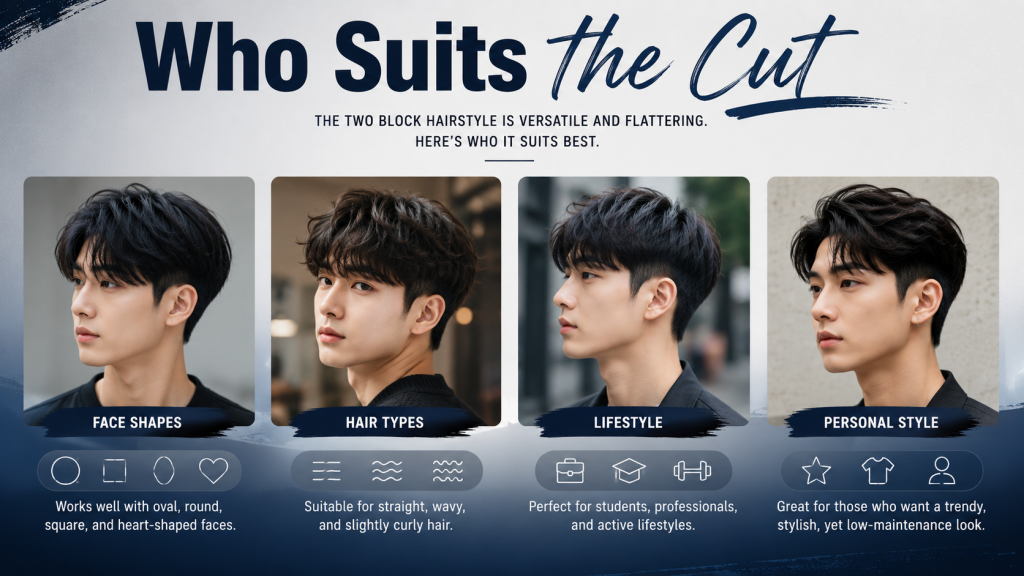
The two block adapts to nearly every face shape and hair texture.
- Round faces benefit from added height and volume on top to elongate the face.
- Oval faces suit almost any variation, since this shape is the most versatile.
- Square faces look best with a softer fringe, like curtain bangs, to balance angular features.
- Long faces work better with a middle part and shorter top length rather than added height.
- Thinning or receding hairlines benefit from a shorter top paired with faded sides, which balances proportions.
Straight, thick hair holds the shape especially well because the density supports the longer top. Thinner hair often needs a perm to build volume at the crown.
How to Ask Your Barber
Bring a reference photo. It removes any guesswork about length, contrast, and styling direction.
Then specify three things:
- Side and back length — a soft taper, a low fade, or a harder disconnected undercut.
- Top length — short for a conservative look, medium for the classic K-drama style, or long for dramatic fringe or flow.
- Fringe style — comma, middle part, textured forward, or swept to the side.
Mention any cowlicks or strong growth patterns too. Your barber can cut the top to work with your natural fall instead of against it.
Styling Tips
Start with damp, towel-dried hair. This gives you better control over direction before you add product.
Match your product to the finish you want:
- Matte clay or paste for textured and fringe-forward looks
- Light styling cream for flowing tops and middle parts
- Pomade for comma hair and polished styles
- Sea salt spray or curl cream for wavy, curly, or permed tops
Use product sparingly. Too much weight flattens the top and kills the movement that defines the cut.
In humid climates, skip water-based gels since they break down quickly. A matte clay or wax holds shape far better and won’t turn greasy.
Maintenance
Trim the sides and back every three to four weeks. They grow out faster than the top and lose the contrast that defines the cut.
The top can stretch to six or eight weeks between trims, depending on how much length you want to keep.
If you add a perm, expect it to last three to six months. The curl loosens gradually, so there’s no awkward grow-out phase.
Two Block vs. Undercut
| Two Block | Western Undercut | |
|---|---|---|
| Transition | Soft, blended | Sharp, disconnected |
| Sides | Often tapered with scissors | Clipper-faded or shaved |
| Aesthetic | Natural, K-drama inspired | Edgy, fashion-forward |
| Grow-out | Graceful | Needs frequent trims |
Where the Style Came From
The two block haircut originated in South Korea in the early 2010s. Korean barbers developed the technique to give men a way to wear longer, styled hair on top without looking messy or unkempt underneath.
K-pop idols and K-drama actors drove the style into the mainstream. Fans copied the look, and Korean barbershops refined it further, turning it into a defined technique rather than a one-off trend.
The name itself describes the technique. Barbers treat the head as two separate “blocks” of hair — one on top, one on the sides — and cut each block to a different length before joining them at a visible line.
Western barbershops picked up the style through global interest in Korean fashion and grooming. Many shops now list “two block” as a standard request alongside fades and pompadours.
Two Block vs. Other Popular Cuts
Comparing the two block to other common styles helps clarify exactly what makes it different.
Two block vs. pompadour: A pompadour relies on height and a swept-back shape, styled mainly with heavy pomade. The two block keeps a more relaxed, natural fall and doesn’t require constant restyling throughout the day.
Two block vs. quiff: A quiff pushes hair upward and backward at the front only. The two block distributes length more evenly across the whole top, giving a fuller silhouette.
Two block vs. crew cut: A crew cut keeps the top short and uniform everywhere. The two block keeps the sides short but lets the top grow noticeably longer, creating far more styling versatility.
Each of these styles blends the transition between top and sides. The two block stands out because it deliberately keeps that transition visible.
Hair Texture Considerations
Hair texture changes how the two block looks and how much upkeep it needs.
Straight hair holds the cut’s shape with minimal effort. It falls naturally into place and needs only a small amount of product to control flyaways.
Wavy hair adds natural texture to the top, which suits the comma and textured fringe variations especially well. A light cream or sea salt spray enhances the wave without weighing it down.
Curly hair creates volume that some men love and others find hard to manage. A curl-specific cream keeps curls defined instead of frizzy, and shorter top lengths make the curls easier to control day to day.
Thick hair supports longer top lengths and holds styles well throughout the day. Barbers often thin thick hair slightly with texturizing shears to prevent it from looking too bulky.
Fine or thin hair benefits most from a perm, since natural volume is harder to achieve. Without a perm, fine hair can look flat on top by midday, so a lightweight volumizing product helps extend the style.
Common Mistakes to Avoid
A few mistakes turn a good two block into a messy one.
Skipping the barber consultation. Walking in and saying “give me a two block” without specifying length or fringe style leaves too much up to guesswork. Always bring a photo and describe the contrast you want.
Overusing product. Piling on wax or pomade weighs the top down and hides the movement that makes the cut work. Start with a small amount and build up only if needed.
Waiting too long between side trims. The sides grow out fast and blur the clean line that defines the style. Stick to a three-to-four-week trim schedule to keep the shape sharp.
Ignoring natural growth patterns. Cowlicks and stubborn partings fight against certain fringe styles. A skilled barber works with these patterns instead of cutting against them.
Choosing the wrong variation for your face shape. A tall, heavy fringe on a round face adds unwanted width, while a flat, swept style on a long face can make the face look even longer. Matching the variation to your face shape makes a real difference in the final result.
Cost and Where to Get It Done
Prices vary widely depending on location and barbershop tier. A standard barbershop cut typically costs about the same as any other men’s haircut, while specialized Korean-style barbershops sometimes charge more for the added precision the cut requires.
Adding a perm increases the total cost significantly, since perming takes extra time and specialized products. Expect to pay more than double a standard cut price if you add a perm on the same visit.
Look for barbers who specifically list “two block,” “K-cut,” or “Korean haircut” in their service menu. These barbers usually have direct experience with the point-cutting and slide-cutting techniques the style depends on.
At-Home Maintenance Between Visits
A few small habits keep the cut looking fresh between barbershop visits.
Wash with a moisturizing shampoo rather than a clarifying one. Clarifying shampoos strip natural oils and can leave the top looking dry and difficult to style.
Blow-dry the top using a round brush if you want extra volume at the crown. Direct the airflow against the direction you want the hair to fall for the most lift.
Trim any obvious stray hairs around the ears and neckline yourself if a full barbershop visit isn’t due yet. This keeps the cut looking sharp without disturbing the overall shape.
Reapply a light styling product midday if the style falls flat, especially in hot or humid weather.
Frequently Asked Questions
Does the two block work for receding hairlines? Yes. Keeping the top shorter and adding a fade on the sides balances proportions and draws attention away from the hairline.
Can curly hair get a two block? Yes. Curly hair actually suits several variations well, particularly shorter top lengths that keep curls controlled and defined.
How long does it take to grow into a two block from a short cut? Most men need six to eight weeks of growth on top before there’s enough length to style properly, while the sides can be cut short immediately.
Is the two block a high-maintenance style? It sits in the middle. It needs more attention than a basic crew cut but far less daily effort than a full pompadour or quiff.
Final Thoughts
The two block haircut delivers a stylish, low-maintenance shape that works across hair textures and face shapes. Bring a clear reference photo, communicate your preferred contrast level, and pick styling products that match the top’s length and texture. Do that, and you’ll walk out with a cut that actually looks the way you pictured it.